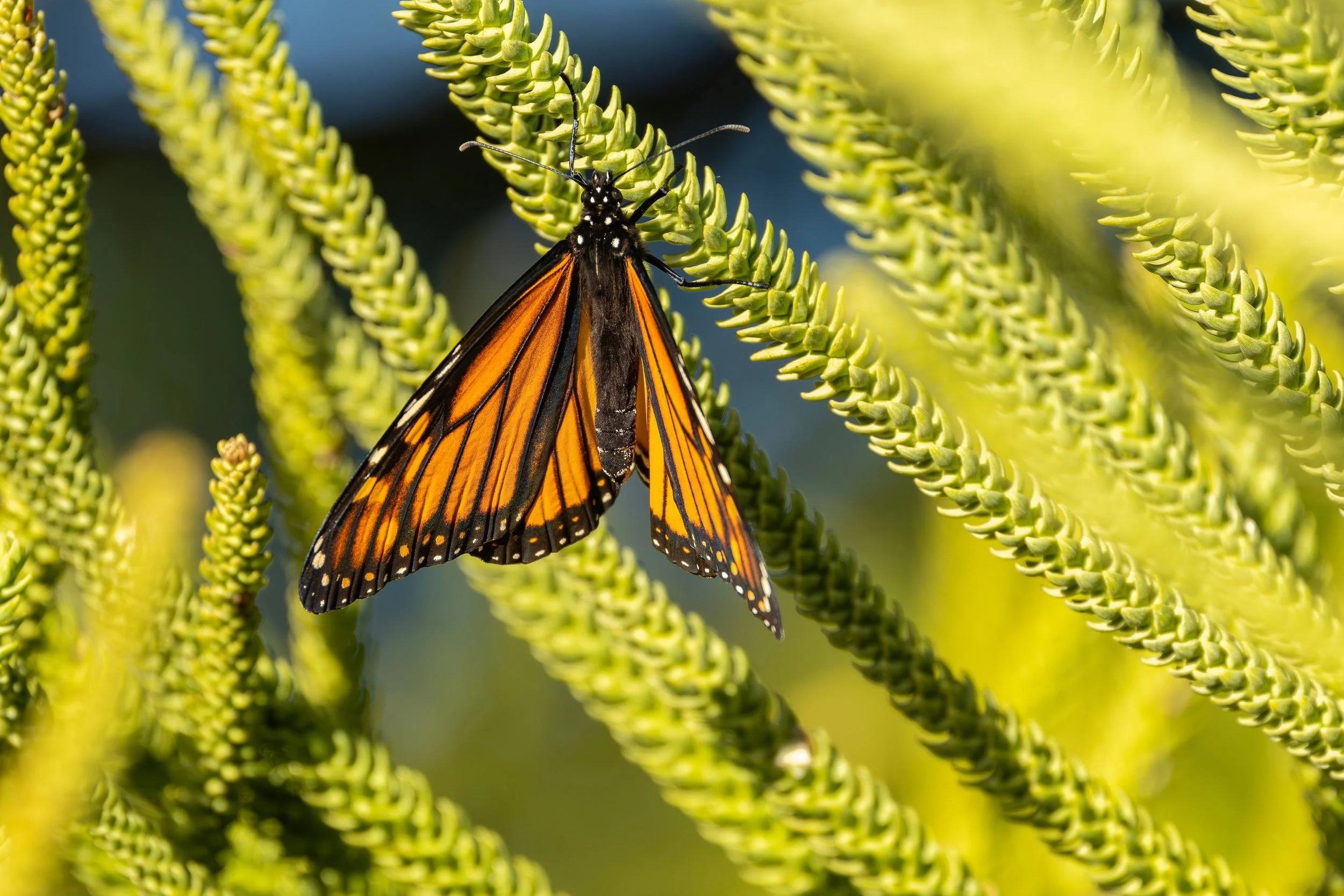
There's a particular kind of magic in watching a honeyeater dart between flowers, or a butterfly settle on a patch of grass you planted yourself. The good news? You don't need a huge garden or years of experience to make it happen — just the right mix of native plants.
Because native birds, bees and butterflies evolved alongside native plants, they're naturally drawn to them for nectar, pollen, shelter and in some cases, somewhere to lay their eggs. Here are ten locally grown natives — all available from our stocklist — that punch well above their weight when it comes to wildlife appeal.
1. Golden Wattle (Acacia pycnantha)
Australia's floral emblem is more than just a pretty face in spring. Its masses of fluffy gold flowers are an early-season nectar source for bees and insects, at a time when little else is in bloom — making it a lifeline for pollinators coming out of winter.
2. Hairpin Banksia (Banksia spinulosa)
Few plants say "bird garden" quite like a banksia. Its distinctive golden flower spikes are packed with nectar and are a favourite of honeyeaters, who'll often perch and feed for long stretches at a time.
3. Purple Coral Pea (Hardenbergia violacea)
This vigorous native climber smothers itself in deep purple pea-flowers through late winter and spring, drawing in native bees and butterflies. Let it scramble over a fence or trellis for a real pollinator hotspot.
4. Running Postman (Kennedia prostrata)
A low, spreading ground cover with vivid red flowers that honeyeaters find hard to resist. It's tough, fast-growing, and doubles as excellent low-maintenance garden bed cover.
5. Manuka / Tea-tree (Leptospermum scoparium)
Covered in small white or pink flowers for weeks at a time, tea-tree is a magnet for native bees and butterflies, and its dense, twiggy growth also offers shelter for small birds.
6. Swamp Paperbark (Melaleuca ericifolia)
With its bottlebrush-style flowers, swamp paperbark is a favourite feeding stop for honeyeaters and other nectar-loving birds, while its dense foliage provides valuable shelter and nesting habitat.
7. Kangaroo Grass (Themeda triandra)
Not every wildlife-friendly plant needs a flower. This iconic native grass provides food and habitat for a range of native butterfly and moth species at various life stages, alongside seed for seed-eating birds.
8. Sweet Bursaria (Bursaria spinosa)
A standout for butterfly lovers — sweet bursaria is a known host plant for several native butterfly species, meaning it doesn't just feed adult butterflies, it supports their entire life cycle.
9. Tasman Flax Lily (Dianella tasmanica)
This strappy, shade-tolerant plant produces small blue flowers followed by deep purple berries, which are a favourite snack for a range of native birds later in the season.
10. Cut-leaf Daisy (Brachyscome multifida)
A cheerful, ground-hugging daisy that flowers almost year-round in the right conditions, providing a reliable and easy nectar source for butterflies and native bees, even in a small garden bed or pot.
Bringing It All Together
You don't need all ten to make a difference — even a handful of these, layered together, can transform a garden into a genuine feeding and shelter stop for local wildlife. Mix flowering times across the seasons, include at least one host plant like Sweet Bursaria or Kangaroo Grass, and you'll have a garden that's working for wildlife all year round.
All ten plants featured here are grown from local provenance seed and available as tubestock from Green Circle Plant Nursery.
Browse our Native Plants range or read more on designing Gardens for Wildlife and Gardens for Pollinators.